The decoction
Four hours before it's any good.
Start to cup
Six steps, and five of them are waiting.
None of this is unusual. It is what filter coffee has always been. It only looks like a method because most places stopped doing it.
01Twice a day
The grind
Once before opening, once at about two. Coffee ground at six in the morning is tired by four in the afternoon, and you can taste the difference even if you couldn't name it. We grind medium-coarse — finer than you'd think, because the drip is slow enough to take it.
025:30am
The filter goes on
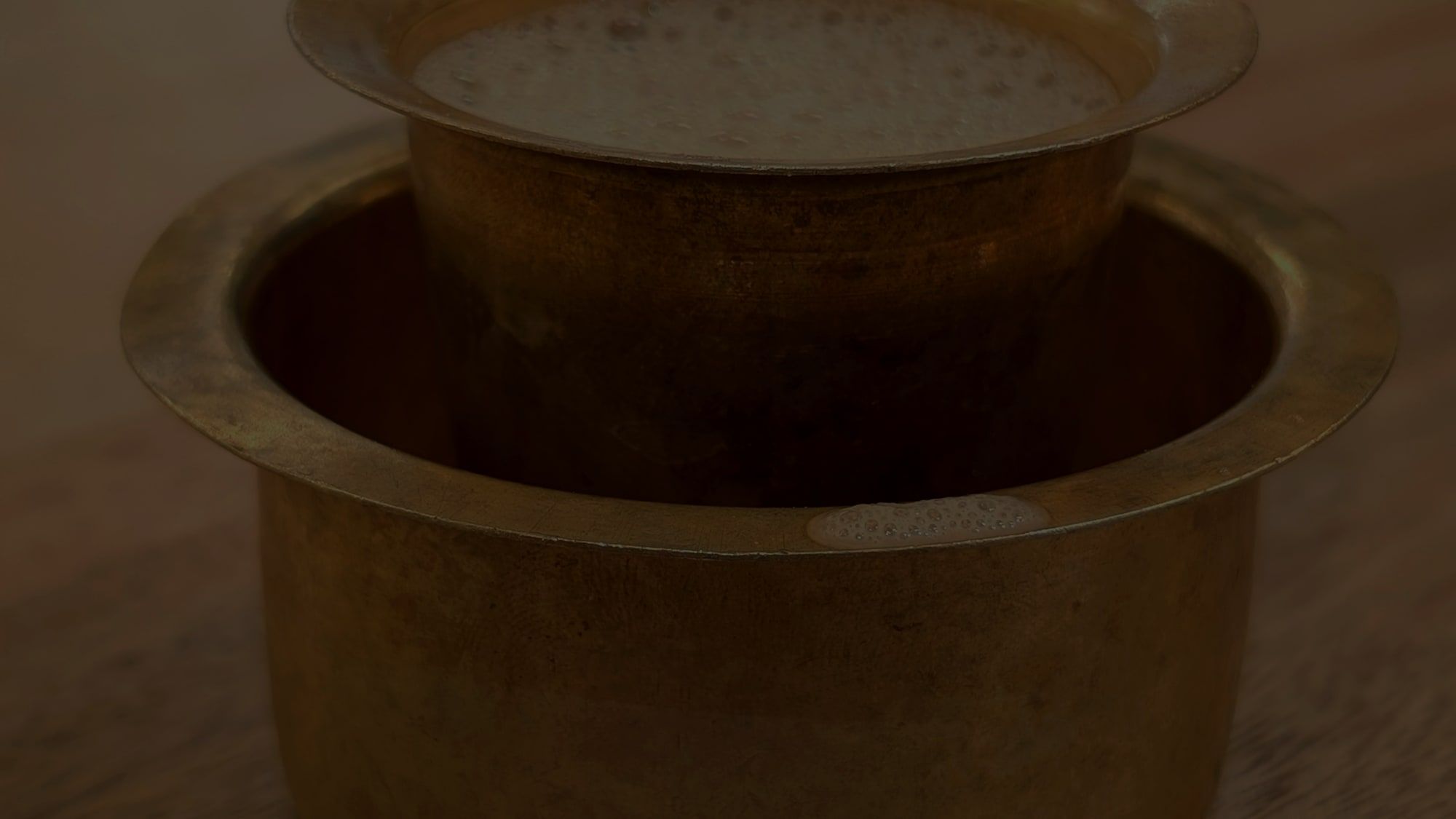
Two-chamber brass filter. Grounds in the top, pressed down with the disc, water just off the boil poured over and the lid on. Then nobody touches it. Prodding it does nothing except make you feel involved.
03Four hours
The drip
The decoction takes about four hours to be worth drinking, which is why we open at six and not at five. It comes through nearly black and thick enough to coat the inside of the vessel. That's the coffee. Everything after this is dilution.
04To order
The milk
Boiled in a pan, not steamed. There is no steam wand on the premises and there is not going to be one. Boiled milk carries a faint cooked sweetness that a steam wand cannot reproduce, and it is the flavour most people are actually remembering when they say they miss proper filter coffee.
05Seventy-thirty
The ratio
Seventy milk, thirty decoction. Ask for it strong and it is fifty-fifty — the same cup with half the milk and five rupees more. There is no third option, because past a point you are just drinking hot decoction and you would not enjoy it.
06Until it behaves
The pour
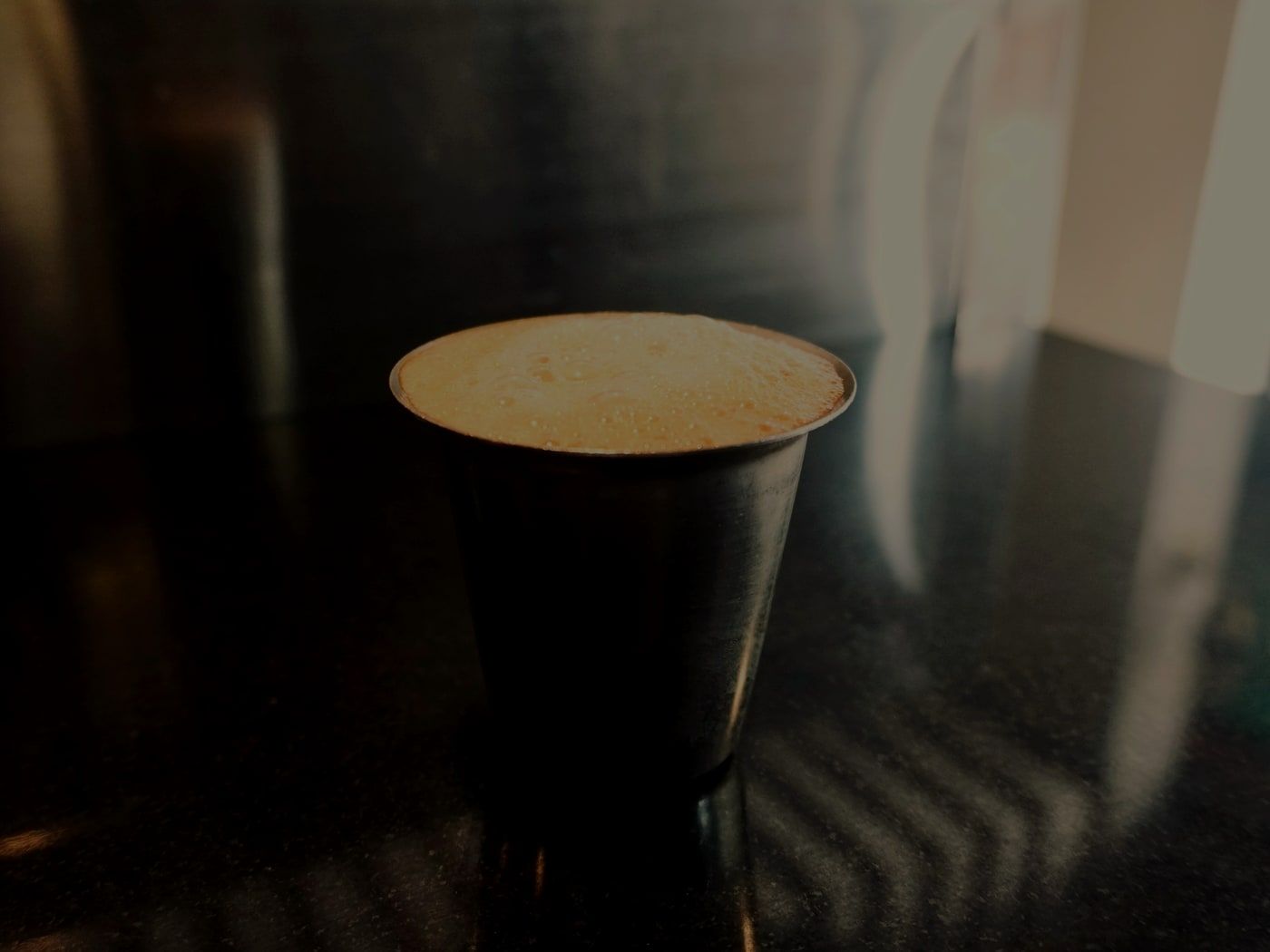
Poured between the tumbler and the davara from a height, six or seven times, until it stops complaining and holds a head. This cools it to drinking temperature and puts air through it. It is not showing off. It is the last step of making it.
The beans
Eighty-twenty, and the twenty matters.
The chicory is not a cost-saving measure and it is not a compromise. It is what gives South Indian filter coffee the body and the slight bitter tail that people who grew up on it are actually looking for. Take the chicory out and you get a perfectly nice cup of coffee that tastes wrong to everybody who matters.
The arabica comes from a single estate near Chikmagalur, about four hours west. We buy it green in fifty-kilo sacks and it goes to Chickpet in batches small enough that nothing sits around.
The roast is medium-dark. Darker than a third-wave café would choose, lighter than the near-black roast most filter houses use. That is the argument we have with our roaster once a year and we have not won it yet, which is probably the right outcome.
Taking some home
We sell the blend by the half kilo.
Same eighty-twenty, roasted the same week, ground to your filter or left whole. Ask at the counter — it isn't on the menu board because we forget to put it up. If we've run out, we will tell you when the next roast lands rather than sell you last month's.
We do not post it. Ring 080 4123 8867 and we'll put a bag aside under your name for the day.